
Survey first: $300–$750
A recorded camera run with distances marked. Yours to keep, and usually credited if the work goes ahead.
We camera the line first, show you what is actually wrong, and then tell you whether relining is the right answer. Often it is. Where the pipe has collapsed or lost its fall, it is not, and we will say so rather than sell you a liner that disappoints.
Relining is a structural repair, not a cleaning method, and the distinction matters when you are comparing quotes. Jetting restores flow through a pipe that is still cracked. A liner restores the pipe.
That also means it is not always the answer. It cannot correct a run that has sagged or lost its fall, and it has nothing to line against where a section has collapsed. A camera survey separates those cases in about an hour, and the answer changes the cost by a multiple.
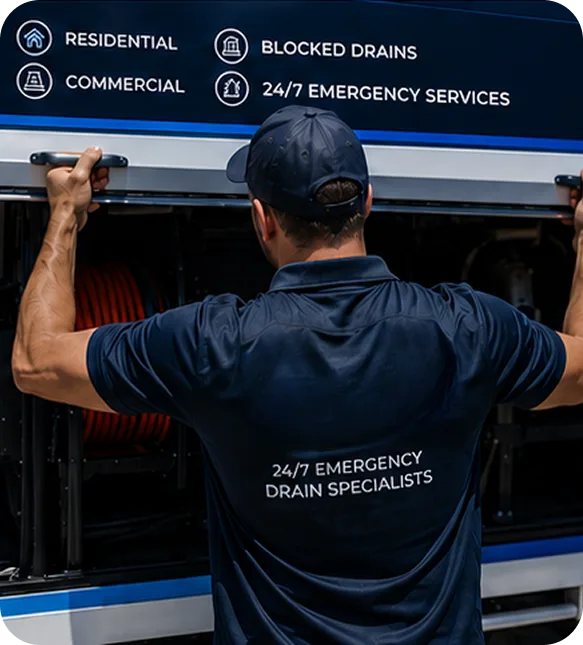
Homes from the first wave of subdivision still run short earthenware sections with mortared joints. Every one of those joints is a place a root can enter and silt can catch.
Houses of this era were generally drained in vitrified clay, laid well, and then left alone for sixty or seventy years. The pipe is usually still round and still sound. The joints have had seven decades of ground movement and root pressure.
That combination is close to the textbook relining case, which is why so much no-dig work in Sydney happens on streets built between the late 1940s and the 1960s.
Forestville (postcode 2087) is one of the Northern Beaches’ older established suburbs, bordered by Killarney Heights, Frenchs Forest and Roseville Chase with Garigal National Park and Bantry Bay to the south. Wide streets of 1950s and 60s homes under mature canopy look lovely and are hard on drains, because those trees have had seventy years to find the pipes.
Ground near water holds more of it, sits lower and moves more through the seasons than ground further up. Pipework laid decades ago has been flexed by that movement for its whole life, and joints open a fraction at a time rather than failing all at once.
It is why faults here tend to arrive as a slow decline rather than a sudden break, and why a camera often finds a run that is uniformly tired instead of one obvious defect. That pattern suits a full-length liner rather than a patch.
People are often surprised that a drain laid before the war is a relining candidate rather than a replacement. Age alone does not decide it. A clay line with a sound barrel and tired joints is close to the best case for a liner.
The cases that genuinely need excavation are different: a collapsed section, a run that has lost its fall, or a pipe crushed out of round. A camera separates those in an hour, and the answer changes the cost by a multiple.
Removing a mature tree is expensive, often needs approval, and frequently does not solve it: the roots already inside the pipe do not leave when the trunk does, and the joint is still open for the next one.
The canopy Forestville is known for is the number one cause of blockages here. Seventy-year-old figs, gums and paperbarks have roots well under the footpath and into private sewer lines.
Relining lets both things be true at once. The garden stays as it is and the drain stops being a route to water. For most owners that is the whole appeal, and it is why no-dig gets specified on established blocks far more often than on new ones.
Very few homes of this age are still on their original layout. A second bathroom, a kitchen moved to the other side of the house, a granny flat out the back: each addition was joined into a system sized for the original plan.
The junctions where those additions were cut in are a common failure point, and they are worth looking at specifically. Relining handles a poor junction well, provided the camera has found it first.
Excavation close to the foreshore brings problems that have nothing to do with plumbing: unstable saturated ground, dewatering, restricted access down a narrow lot, and reinstatement of landscaping that was not cheap to build.
The trenchless comparison is not repair against repair. It is repair against repair plus everything sitting on top, and on a waterfront block that second half is usually the bigger number.
A recorded camera run with distances marked. Yours to keep, and usually credited if the work goes ahead.
The prevailing 2026 Sydney range for residential sewer relining.
Proportionate for one fault in a sound run. We will recommend it over a full liner when that is what the camera shows.
For a run failing along its length, which on old clay is the common finding.
Plus reinstatement. On a bare lawn it can win. Under anything you would miss, it usually does not.
Figures reflect the 2026 Sydney market rather than a quote. You get your own number once we have seen inside the pipe. Figures here are indicative of the 2026 Sydney market rather than a quote from us, you get your own number as a fixed price before any work starts.

Nothing is priced until a camera has been down the line. The survey is recorded, distances are marked from a known point, and the footage is yours.
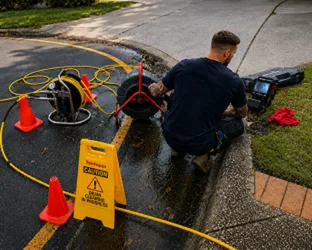
A single defect in a sound run wants a patch. A run failing along its length wants a full liner. A collapsed or sagging section wants excavation. The camera decides, not the quote.
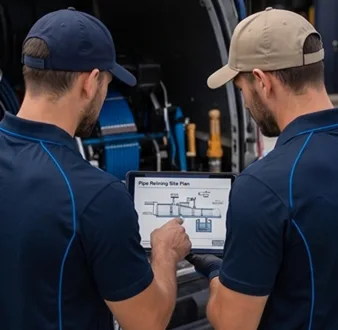
Jet clean, install through the existing opening, cure in place. Water is off for part of the day and nothing above the pipe is disturbed.

Junctions reinstated, final camera run, and the compliance paperwork where the work is notifiable. You keep both recordings.
Describe what the drain is doing and how often. We will tell you whether it sounds structural or whether a clean and a maintenance interval is the honest answer.
Straight answers on price, durability and when to dig instead.

Call for the fastest answer, or send the form and we will arrange a camera survey before anything is quoted.

Leave your details and our local Forestville team will call you back fast.